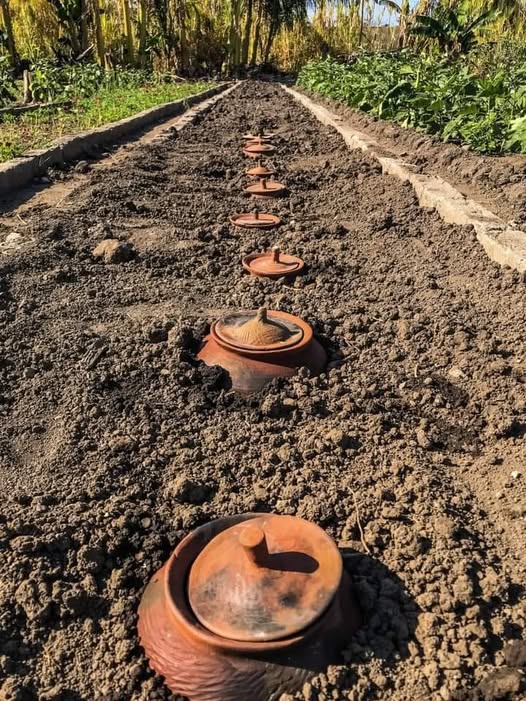
by Mickey Gast, Rural Sprout
May 30, 2023
As an overly-protective gardener, I’m equally excited and anxious about my vacation plans for this summer. I’m more than ready for a change of scenery, and the anticipation that comes with planning days of doing absolutely nothing. On the other hand, I am slightly anxious about leaving my garden unattended for a few weeks at a time in the hottest month of the year. Yes, we will have housesitters, but they’re here to be at the beck and call of our pets, not our tomato plants. That would be especially cumbersome if we have another drought like we did last summer. Last summer, I found a solution that worked really well for keeping our garden watered while we were away. Unfortunately, it was after our long summer vacation, so a lot of the damage had already been done. But it worked wonderfully when we went away for a week in August. Said solution is called an olla (read kind of like oh-yeah). It’s a very old and very efficient way of putting moisture into the ground, right where the roots of the plant need it. What is an olla? Simply put, an olla is a terracotta (or any other type of unglazed clay) vessel that you bury in the ground and fill with water. Gradually, and only if it’s needed, this water seeps out through the pores of the terracotta and feeds the roots of the plants nearby. Over time, the roots of the plants in the vicinity of the olla will start growing towards this source of water. You can buy ready-made ollas, but even a houseplant-sized one will cost a pretty penny. The larger ones meant for outdoor use can go for sixty dollars or more. So the obvious choice is to DIY some ollas using terracotta pots. 6 Reasons to Use an Olla in Your Garden 1. Home-made ollas are a low-tech solution. We can keep our olla system as simple as 1-2-3. That’s because we only need three “ingredients” to make it work: - The terracotta pot - Something to plug the hole of the terracotta pot - A cover for the pot For my small garden, a few ollas strewn about where I’m planting thirsty fruit-bearing plants is enough to make a difference. If I had a bigger garden, I could hook up the ollas to a more elaborate irrigation system. But the magic of ollas is that the simple and frugal solution is often enough. 2. Ollas reduce the time you spend watering. We don’t have to wait for vacation before you set up ollas in your garden. We can do it as soon as you transplant your seedlings in the ground in spring and keep this system running all the way until late fall. That means an entire growing season where we focus on keeping the ollas filled, rather than on watering our entire garden. 3. Ollas cut down on the amount of water you use. In addition to saving us time, ollas will also save us water. Because the water is directed deeper underground, it will not evaporate as quickly as a top sprinkle might. 4. Ollas help us water below mulch level. I mulch my garden diligently during the summer, but I still have to water it. Surely, I can’t be the only one finding it hard to water below the level of the mulch, as close to the roots as possible. Ollas solve this problem by dispersing the water underneath the mulch. 5. Ollas prevent water stress. Even when we have the best of intentions, during a hot and dry summer, plants will go through cycles of being (over)watered and underwatered. By making the water available in an underground reservoir right next to the roots, we can avoid this cycle of too wet followed by too dry. 6. Ollas prevent soil compaction. Because we’re directing the water deeper underground, we are not compacting the soil every time we water.